Three months in Tanzania to explore Karatu and the cultural heritage of the Rift Valley
“Habari!” … “Nzuri!”.
The first words that greet us in Tanzania are not mere pleasantries, but keys to a world where health, community, and collective well-being still lie at the center of life.
Arkeomount begins a new journey — a three-month exploration through the heart of Africa: Tanzania.
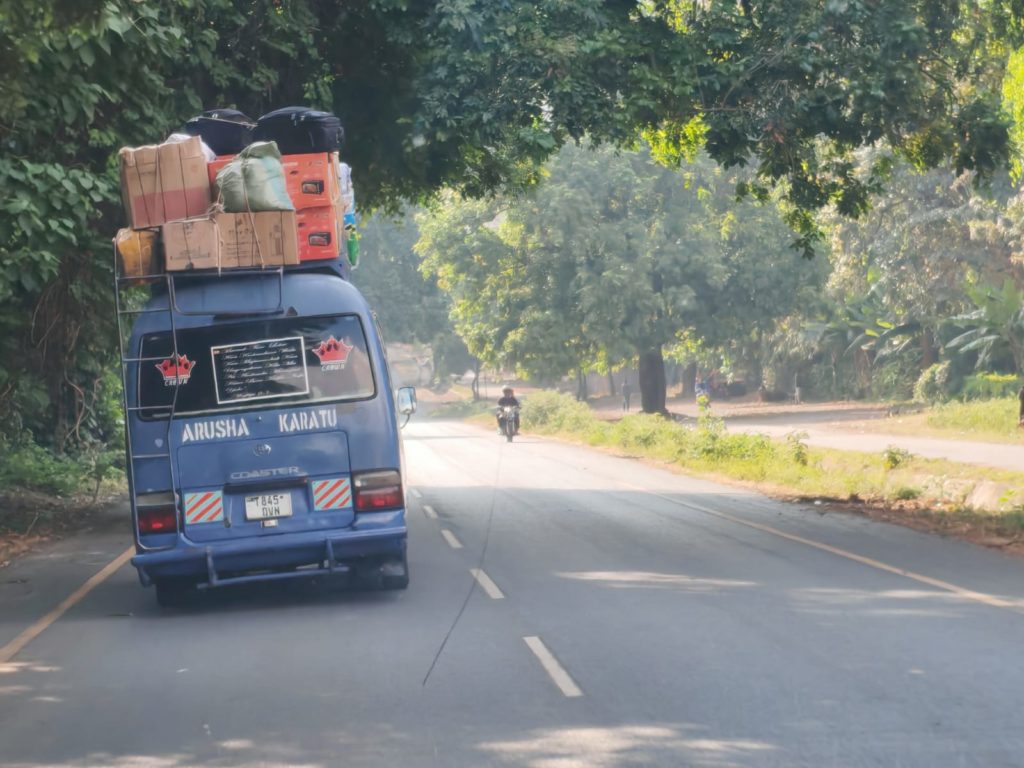
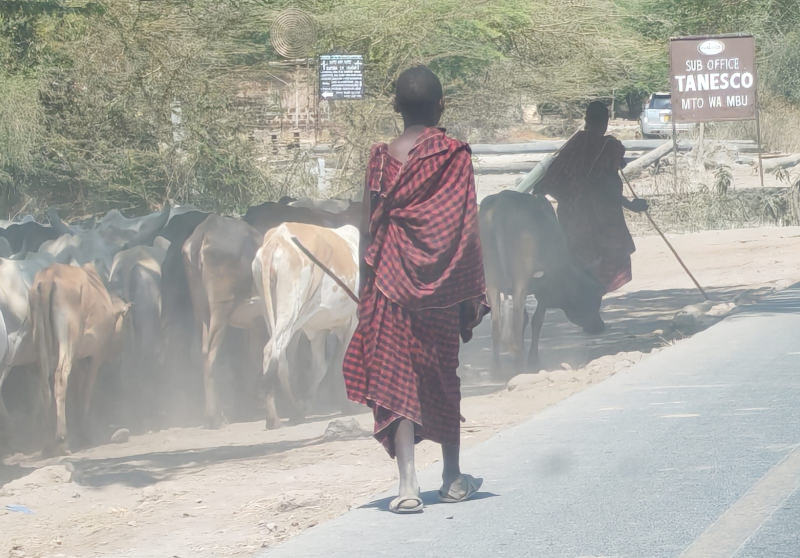
Our path starts in Arusha, at the foot of Mount Kilimanjaro and the Meru volcano, and continues along roads that intertwine with the deep history of the continent. A few kilometers later, the landscape opens up: savannah, scattered shrubs, and the first groups of Maasai herders with their flocks, villages encircled by wooden fences. It feels like walking through a living anthropology textbook, where the ways of dwelling and dressing narrate ancient yet vibrant stories.
The Rift Valley, cradle of humankind, is not only a place of extraordinary geological and archaeological significance — think of Olduvai Gorge, not far from here — but also a cultural crossroads in constant motion, a mosaic of peoples, languages, and traditions.
Take Mto wa Mbu, a town at the intersection of trade and cultural routes, home to representatives of more than 120 of Tanzania’s ethnic groups. The Maasai, easily recognizable in their red shúkà (for men) and purple-toned wraps (for women), are Tanzania’s most iconic people — once warriors, now mostly herders. Yet they are far from the most numerous. The country’s extraordinarily rich and diverse cultural heritage also includes the Sukuma, the largest community, numbering around ten million. They combine agriculture, cattle herding, and ritual dances that recount their origins. On the slopes of Kilimanjaro, the Chagga have prospered thanks to coffee and education, blending Christianity with ancestral traditions. In the southeast, the Makonde carve wood into masks and sculptures — true vessels of spiritual memory. Finally, the Hadza or Hazadabe, the last hunter-gatherers, still live much as their ancestors did thousands of years ago, near the Serengeti — a people we hope to meet during our stay.
Together, these communities reveal that Tanzania’s richness is not only natural and archaeological, but profoundly human — an anthropological heritage that lives on in daily gestures, crafts, and stories passed down through generations, now interwoven with life in both small villages and growing towns.
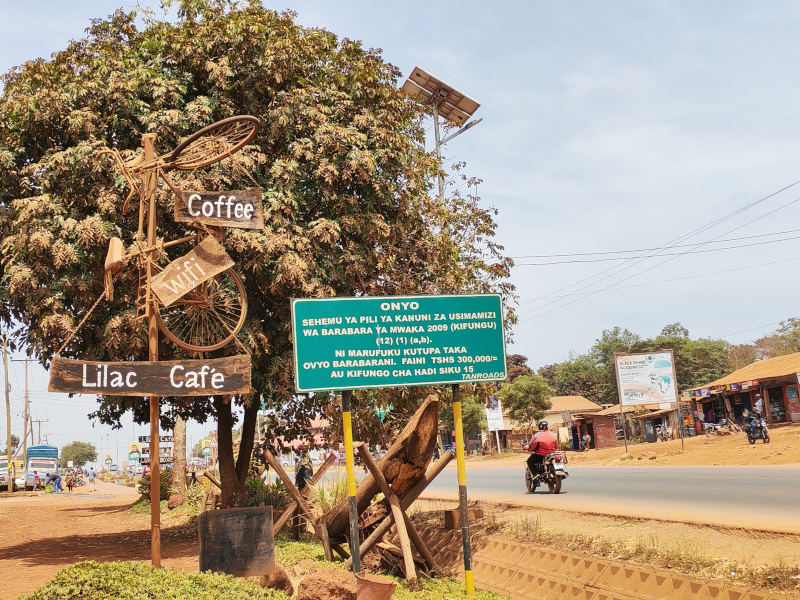
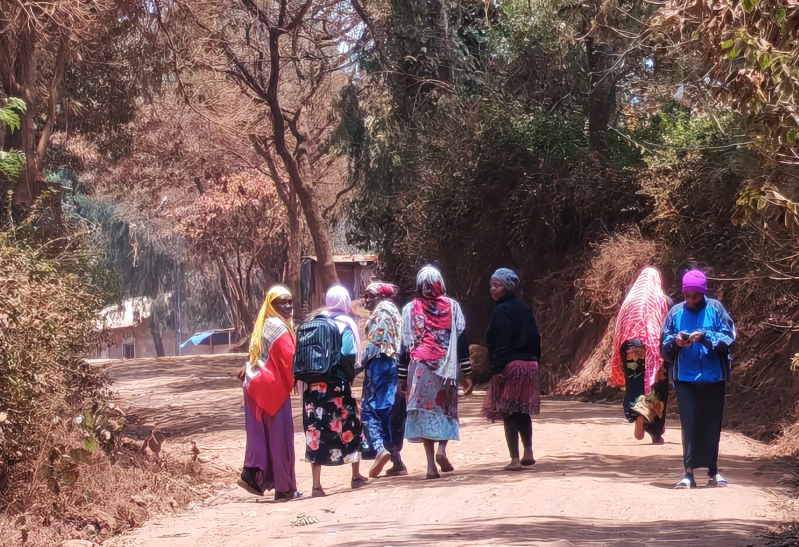
Wandering through open-air markets and among street vendors, the bright colors of women’s fabrics blend with the deep red of Maasai cloaks and the equally red dust that covers everything. As we approach Karatu, the landscape changes again: coffee plantations climb toward the plateau, mud and stone houses alternate with small urban details — like a hand-painted sign reading “Queen Salon.” These are not monuments, but fragments of everyday life that become heritage in their own right — testimonies of resilience and creativity.
This intangible heritage renews itself day by day through gestures, habits, and exchanges. And it is precisely this exchange that defines our journey. As anthropologist Bronisław Malinowski once noted, the act of giving is never pure altruism but a way to create bonds and strengthen communities. In this spirit, our arrival — with our medical and journalistic experience, and the energy of our two children who will attend a local school — will intertwine with what we hope to receive in return: knowledge, smiles, and new perspectives.
Karatu is not merely a stop on the way to the Ngorongoro Crater. It is a living laboratory of cultural diversity — a crossroads between past and future — where red dust is not only a natural element but a metaphor: a trace that settles on us, marks us, and reminds us that we are part of a much wider story, one that unites nature, culture, and humanity.